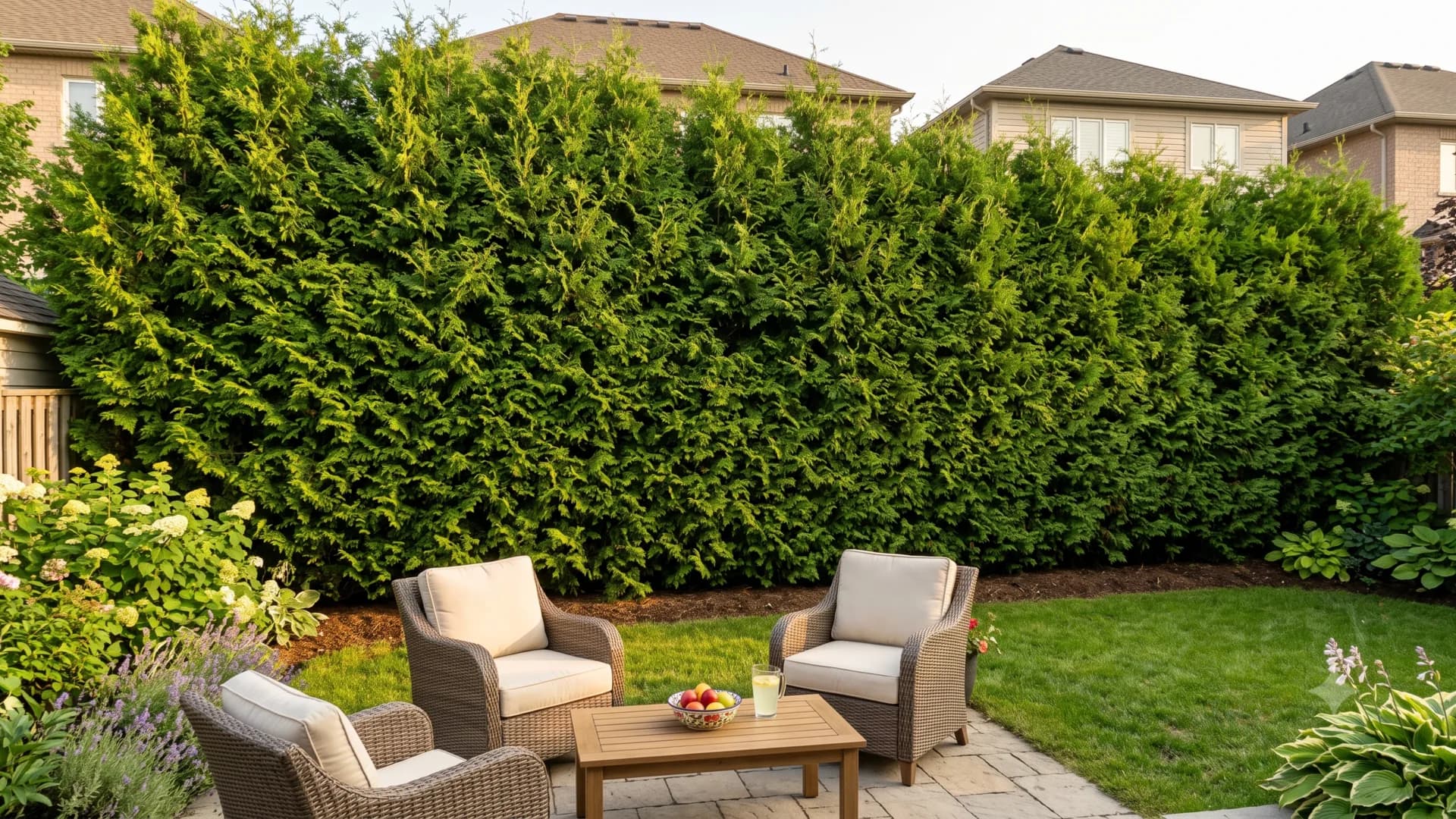
Cedars are sold everywhere in spring, stacked in rows outside garden centres and loaded into hatchbacks by hopeful homeowners every Saturday morning. On the lot they all look more or less identical. Twelve months later, some of those plants are dense, deep green and closing into a screen, and others are thin, bronzed, and half of them are simply gone.
The difference is almost never luck. Buying cedar trees well is a skill, and most of it comes down to knowing what you are looking at before you pay for it, and understanding what happens to the plant between the nursery field and your property.
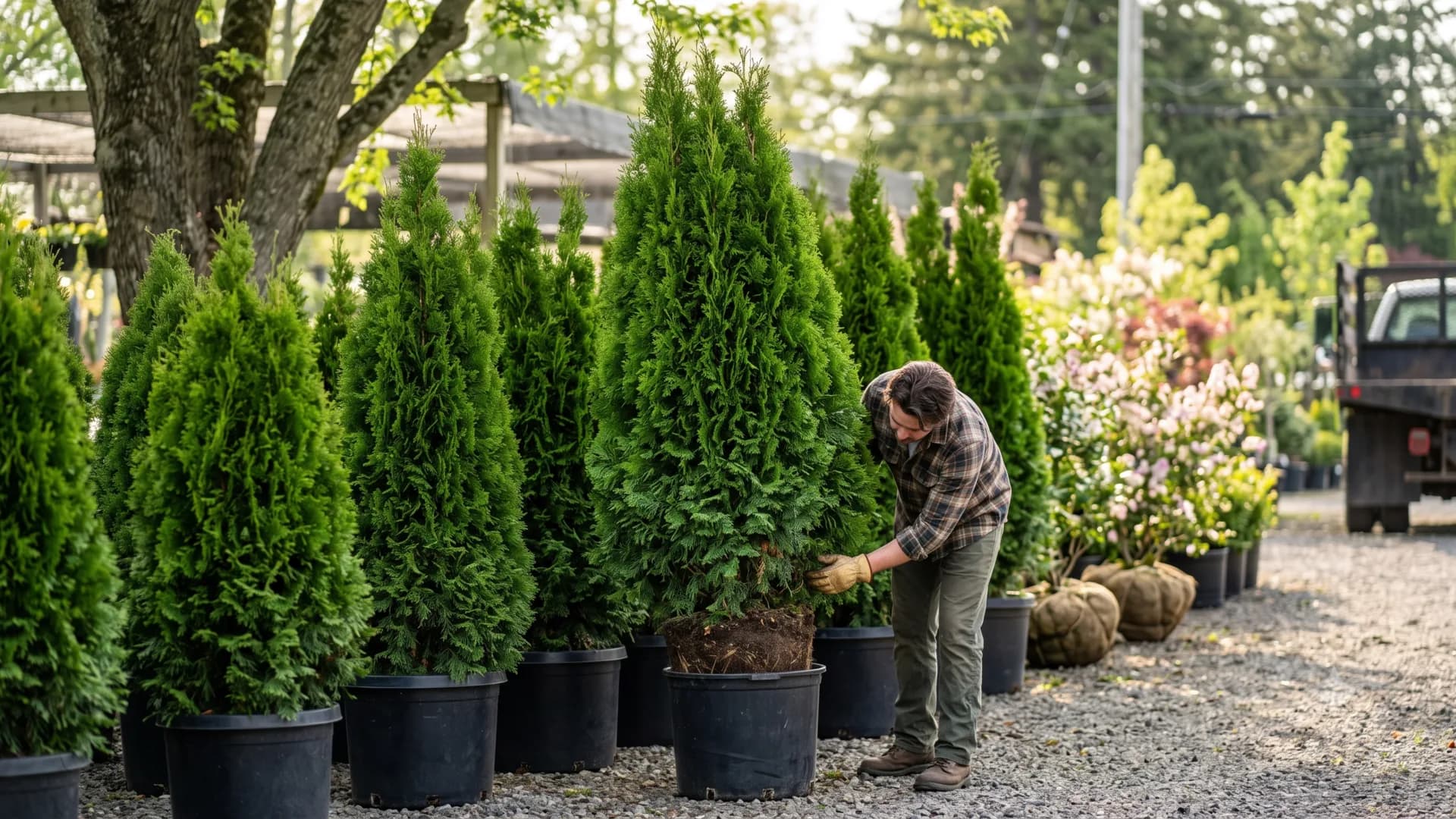
Know Which Cedar You Are Actually Buying
The label is the first place things go wrong. Emerald cedar, properly Thuja occidentalis Smaragd, is the narrow columnar plant most people picture when they imagine a tidy hedge. It holds its colour through winter, stays around three feet wide and reaches roughly twelve to fifteen feet at maturity.
Eastern white cedar is the same species in its wild form. It is cheaper, faster, taller and considerably broader, and it is the right choice when you need real height or you are screening a long boundary on a large lot. Buying the wrong one is the most expensive mistake available here, because the plant will do exactly what it was always going to do, just not what you wanted it to. If you are unsure which suits your property, that is worth resolving before you shop, and it is a normal part of planning any tree and shrub planting project.
Reading a Cedar Before You Pay for It
Ignore the top of the plant and look at the bottom. Good cedars are dense from the soil line upward. Thin, leggy growth in the lower third means the plant was crowded in production, and that gap will still be there in five years, because cedar does not fill back in from bare wood.
Then check colour. A healthy plant is uniformly green, or in late winter carries a slight even bronze that greens up again in spring. Patchy brown, particularly on the interior, is a warning rather than a bargain. Squeeze the root ball if you can. It should feel moist, firm and heavy. Dry, light root balls have been sitting on a lot in full sun, and no amount of aftercare fully undoes that.
Finally, the habit that saves the most money when buying cedar trees is simple. Judge the whole batch rather than the best plant in it. You are buying a hedge, and a hedge is only ever as good as its weakest member. Uniform height and uniform density across every plant matter far more than finding one exceptional specimen among twenty ordinary ones.
Pot Grown, Field Dug, and What the Difference Means
Cedars come to market two ways. Pot grown plants carry their entire root system and transplant with very little shock, which makes them forgiving for a homeowner planting on a weekend. They are usually smaller and cost more per foot of height.
Field dug plants, wrapped in burlap and wire, are lifted from nursery rows and lose a meaningful share of their roots in the process. They give you far more size for the money and they establish reliably, but they demand correct handling, deep watering and a properly prepared trench. Larger cedars also weigh a great deal, which is why they usually arrive as part of a wider project such as a backyard construction build rather than in the back of a car.
Timing, Delivery, and Getting Cedars Into the Ground Well
Spring and early autumn are the windows. Autumn is arguably the better of the two, because cool air and still warm soil let roots establish without the plant fighting summer heat at the same time. Midsummer planting is possible but unforgiving, and it demands a watering discipline most people cannot sustain through August.
Whenever you buy, get the plants into prepared ground within the same week. Cedars left standing in their pots on a driveway dry out faster than almost anything else you will buy, and a week of neglect at that stage will show for years. We deliver and plant throughout the service areas we cover across the GTA and York Region, which takes that risk off the homeowner entirely.
Buying cedar trees well is really an exercise in patience at the front end. Choose the right species, inspect the batch rather than the sample, match the growing method to the job, and plant into ground that was prepared first. If you would like help sizing a hedge for your own property, tell us what you are screening and we will spec the plants with you.