Somewhere between the first barbecue of the season and the first long evening on the patio, the same thought arrives in almost every backyard across the Greater Toronto Area. The neighbours can see everything. That is usually the moment a homeowner starts looking seriously at cedar trees for privacy, and the question underneath the search is always the same. Does a living screen actually work, or is it years of waiting for something a fence could deliver by Friday?
The honest answer is that it works, and it works beautifully, but only when the planting is planned rather than improvised. A cedar hedge is not a product you install and forget. It is a slow, living wall that rewards good soil, correct spacing and a little patience, and punishes shortcuts with brown gaps you will be looking at for a very long time.
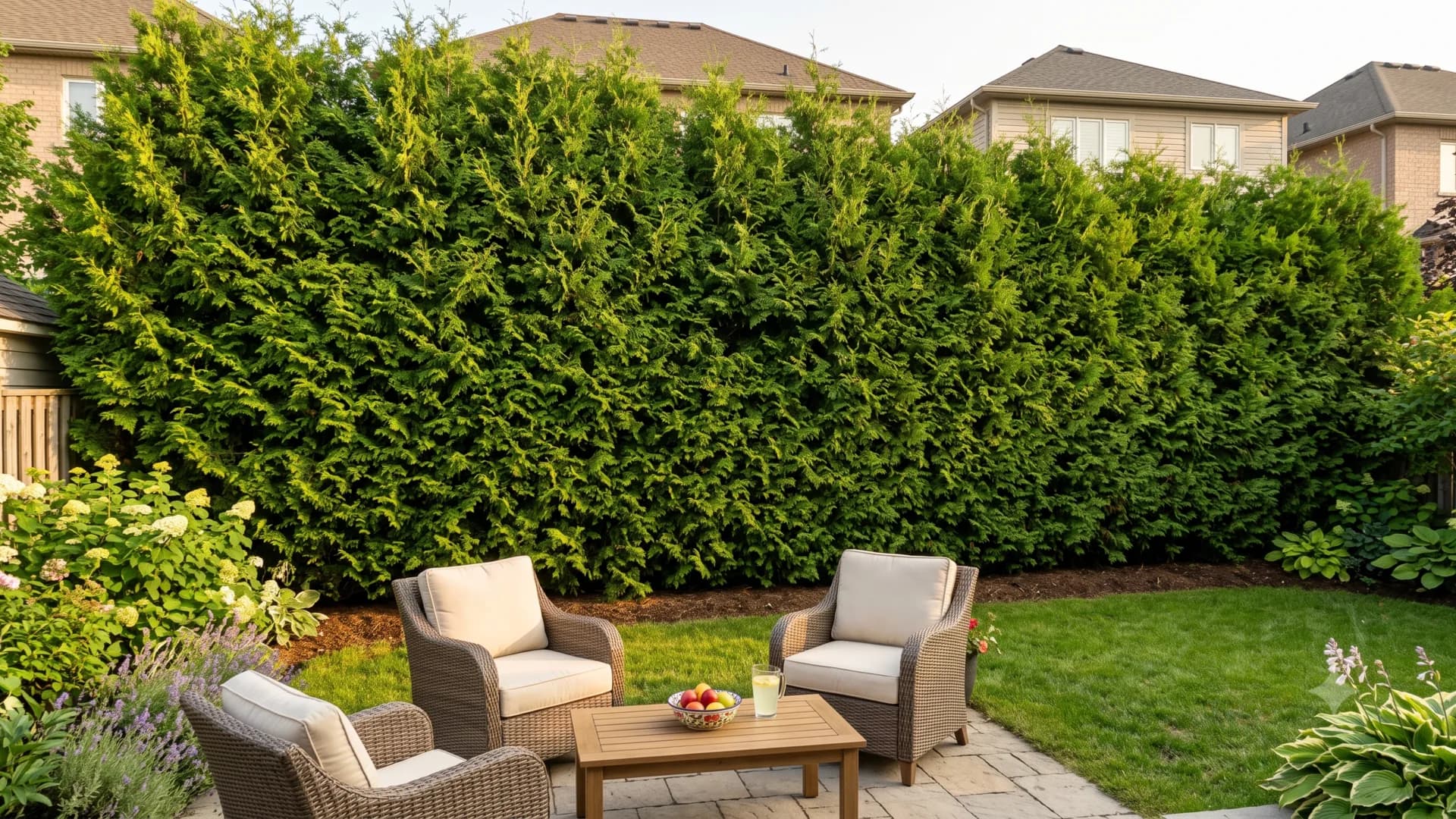
What a Cedar Hedge Actually Does for Privacy
A mature cedar hedge does three things a fence cannot. It holds its green through every month of the year, which matters enormously in a climate where bare branches would leave you exposed from November to May. It softens sound, absorbing the hum of traffic and the carry of voices in a way that a solid panel simply bounces back. And it gives depth to a property line, turning a hard boundary into something that feels like the edge of a garden rather than the edge of a lot.
There is also the matter of height. Most municipal fence limits sit around six feet, and beyond that you are into permits and conversations you may not want to have. A cedar screen can carry privacy well above that line, which is why our tree and shrub planting crews are so often called to properties where a second storey window next door has quietly become the problem.
Choosing the Right Cedar for a Southern Ontario Property
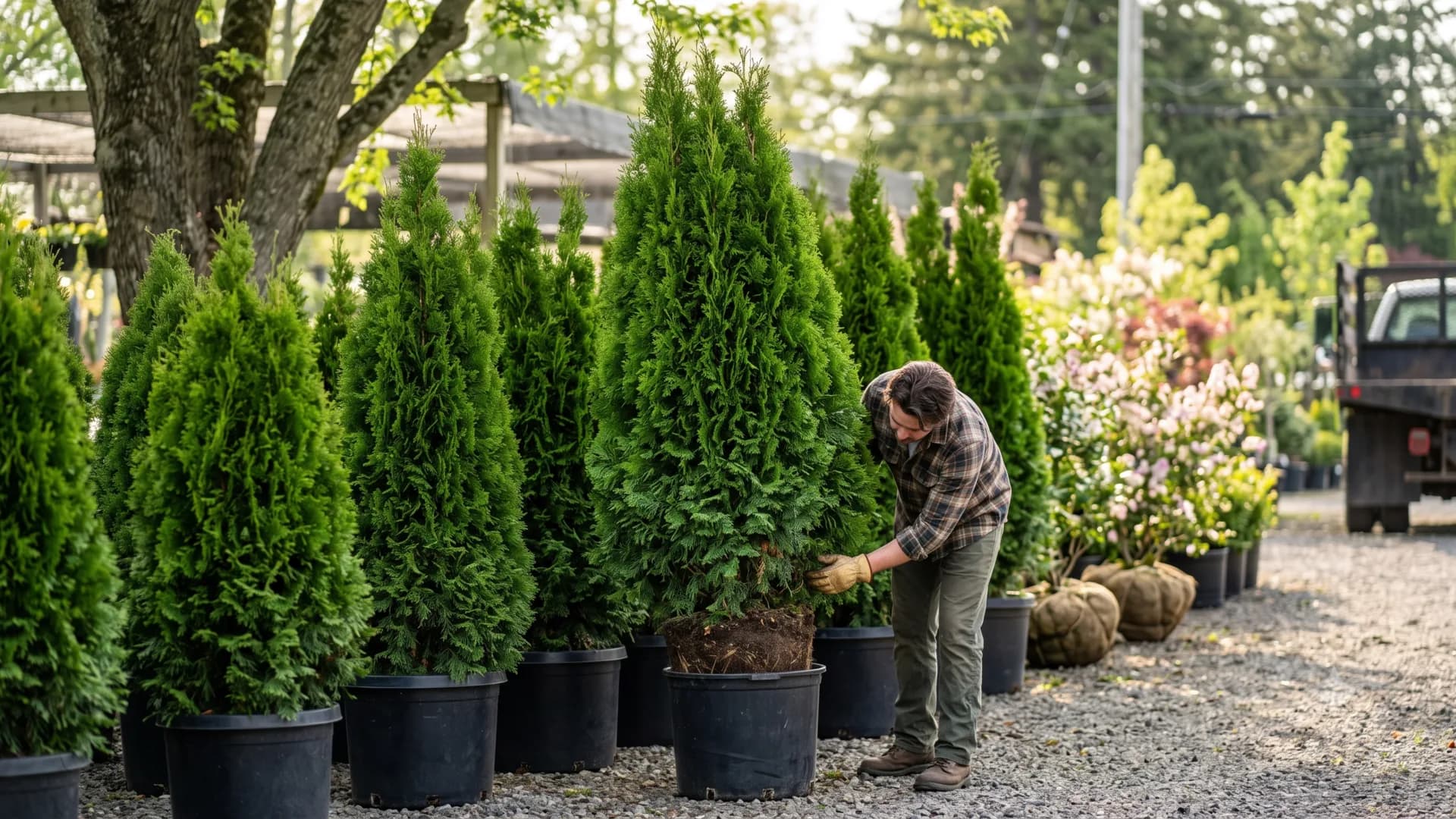
Not all cedars behave the same way, and this is where most disappointing hedges begin. Emerald cedar, sold under the name Smaragd, is the narrow, upright, tidy option. It stays roughly three feet wide, holds a rich colour through winter and suits a formal line along a side yard or a pool surround. It also tops out somewhere around twelve to fifteen feet, so it is not the answer if you need to screen something tall.
Eastern white cedar, the native species, is the workhorse. It grows faster, grows taller, tolerates our clay soils and shrugs off winters that leave other evergreens looking tired. It is broader and slightly wilder in habit, which reads as generous on a large property and crowded on a narrow one. Deciding between the two is genuinely a design question rather than a shopping question, and it is one we work through during landscape design before a single plant is ordered.
Spacing, Soil, and the Work That Happens Before Planting
Spacing is where good intentions go wrong. Planted too far apart, cedars never close into a screen and you spend five years staring at gaps. Planted too tightly, they compete, thin out at the base and eventually die back in the middle where light cannot reach. Emerald cedars generally want somewhere near two feet on centre. White cedars want considerably more room than most people give them.
The larger issue is what sits below. Much of the region is heavy clay that holds water in spring and bakes hard in August, and cedars planted straight into it will sulk for years. A proper installation means a continuous trench rather than individual holes, generous soil amendment, a base that drains, and a mulch layer that keeps moisture steady through the summer. You can see how that groundwork translates into finished hedges throughout our completed projects across Markham and the surrounding region.
Living With Cedar Trees for Privacy Over the Long Run
The first two summers are the ones that matter. New cedars need consistent deep watering, not a quick pass with the hose, and a single season of drought stress in year one will show as thin growth for years afterward. After that, a hedge is remarkably undemanding. One shearing a season keeps the face tight and encourages density, though the rule is never to cut back into old bare wood, because cedar will not regenerate from it.
Two local realities are worth naming honestly. Deer will browse cedar hard in winter where pressure is high, and a hedge planted along a driveway or a municipal road will feel the effect of road salt. Both are manageable with placement and protection, and both are far cheaper to plan for than to fix afterward.
So, does it work? Yes. Give it good soil, honest spacing and three seasons of patience, and cedar trees for privacy will outperform any fence you could have bought instead, improving every single year while a fence slowly weathers. If you are weighing a living screen against a fence for your own property, tell us about the space and we will walk the site with you.