
By mid October, many homeowners look out at a lawn worn thin by summer heat, backyard games and the occasional dry spell, and wonder whether there is still time to fix it before winter. The question comes up every year, and the answer depends on the calendar, the weather and exactly what you hope to achieve. Fall aeration and overseeding are among the most effective things you can do for a cool season lawn in Ontario, and while the ideal window is earlier in autumn, October is not always too late.
Understanding why fall is the preferred season, and how timing affects the result, will help you decide whether to act now or plan for spring.
Why Fall Aeration and Overseeding Work So Well
Most lawns across the GTA are made up of cool season grasses such as Kentucky bluegrass, perennial ryegrass and fescues. These grasses grow most vigorously in cool weather with adequate moisture, which makes late summer and early autumn their prime season. Warm soil encourages seeds to germinate quickly, while cooler air reduces stress on young seedlings. Weed competition also declines as the season progresses.
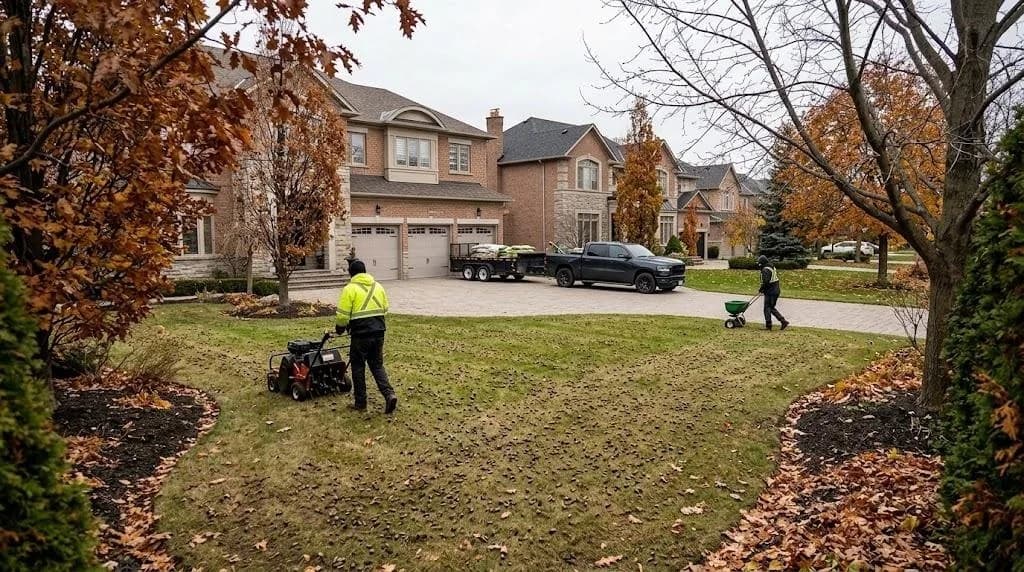
Aeration relieves compaction by removing small plugs of soil, allowing air, water and nutrients to reach the roots. It also creates ideal pockets for seed to settle into, improving seed to soil contact. Combining the two, aeration followed by overseeding, thickens thin areas, introduces improved grass varieties and builds a denser lawn that resists weeds next year. Our lawn maintenance service includes aeration and overseeding as part of a programme that builds a thicker, healthier lawn.
The Ideal Window and Where October Fits
In southern Ontario, the best time to overseed is typically from late August through mid September, when soil is still warm and there are several weeks of growing time before frost. Seed sown in this window has the best chance to germinate, establish roots and survive winter.
Early October can still work, particularly in a mild autumn, though germination slows as soil temperatures fall. Perennial ryegrass germinates fastest and is often the best choice for later seeding. By late October and November, however, new seedlings may not have time to establish before the ground freezes, and the risk of failure increases. Aeration alone remains beneficial later into the fall, as long as the ground is not frozen or waterlogged, since it relieves compaction regardless of seeding.
Dormant Seeding as an Alternative
If the window has passed, there is another option known as dormant seeding. This involves spreading seed late in the season, once the soil is cold enough that it will not germinate until spring. The seed sits dormant through winter, and as the soil warms in spring, it germinates early, often getting a head start on weeds. Freeze and thaw cycles help work the seed into the soil.
Dormant seeding carries some risks, including seed loss to birds, runoff or harsh conditions, and results can be less predictable. For many homeowners, the better approach is to aerate this fall and plan overseeding for early spring or the following late summer. Preparing the whole property before winter is also important, and our article on preparing your landscape for a Toronto winter covers the essentials.
Getting the Most From Your Lawn This Season
If you do seed in October, keep the soil consistently moist until germination, and avoid heavy foot traffic on new areas. Continue mowing at a moderate height until growth stops, and keep fallen leaves off the lawn, since a thick layer smothers grass and invites disease. A fall fertiliser can help established grass store energy for winter and green up faster in spring. Fall cleanups that clear leaves and debris and tidy beds are part of the work we do across the region, as you can see in our projects.
Whether it is the right moment for fall aeration and overseeding or time to plan for spring, a professional assessment takes the guesswork out of the decision. Jayden’s Landscaping serves homeowners across Markham and the GTA, and you can request a free quote through our contact page.