
There is a particular disappointment reserved for the homeowner who signed up for driveway snow removal in November and then stood at the window during the first real storm, wondering when, or whether, the truck was coming. Most of that disappointment is avoidable, and almost all of it comes from not knowing what the service actually includes before the snow starts to fall.
Here is what a well run winter looks like from your side of the glass, so you know what you are paying for and what to ask before you sign.
When the Truck Actually Arrives
The first thing to understand is that clearing is triggered by accumulation, not by the first flake. Most contracts begin service once snow reaches a set depth, commonly around five centimetres, because clearing a dusting every hour would be neither practical nor affordable. During a long storm that means the driveway may be cleared more than once, with a final pass after the snow stops.
Where you sit on the route matters as much as the trigger depth. A contractor works a geographic loop, and driveway snow removal is fastest and most reliable when your property sits sensibly within that loop rather than at the far edge of it. Ask directly where you fall on the route and what the expected clearing time is after snowfall ends. A vague answer in November becomes a cold morning in January. This is a fair question to put to anyone offering snow removal.
The Windrow, the Salt, and the Fine Print
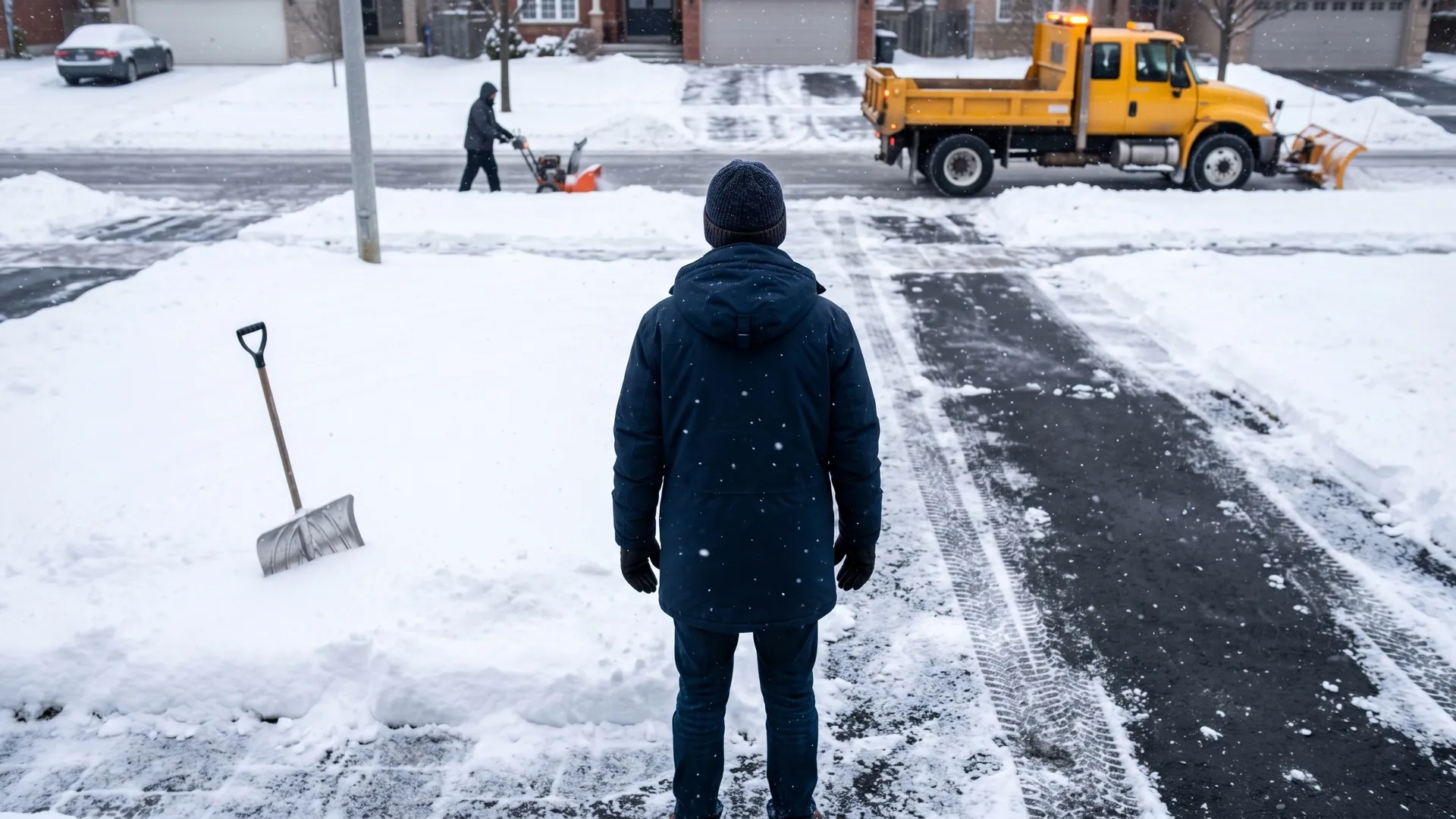
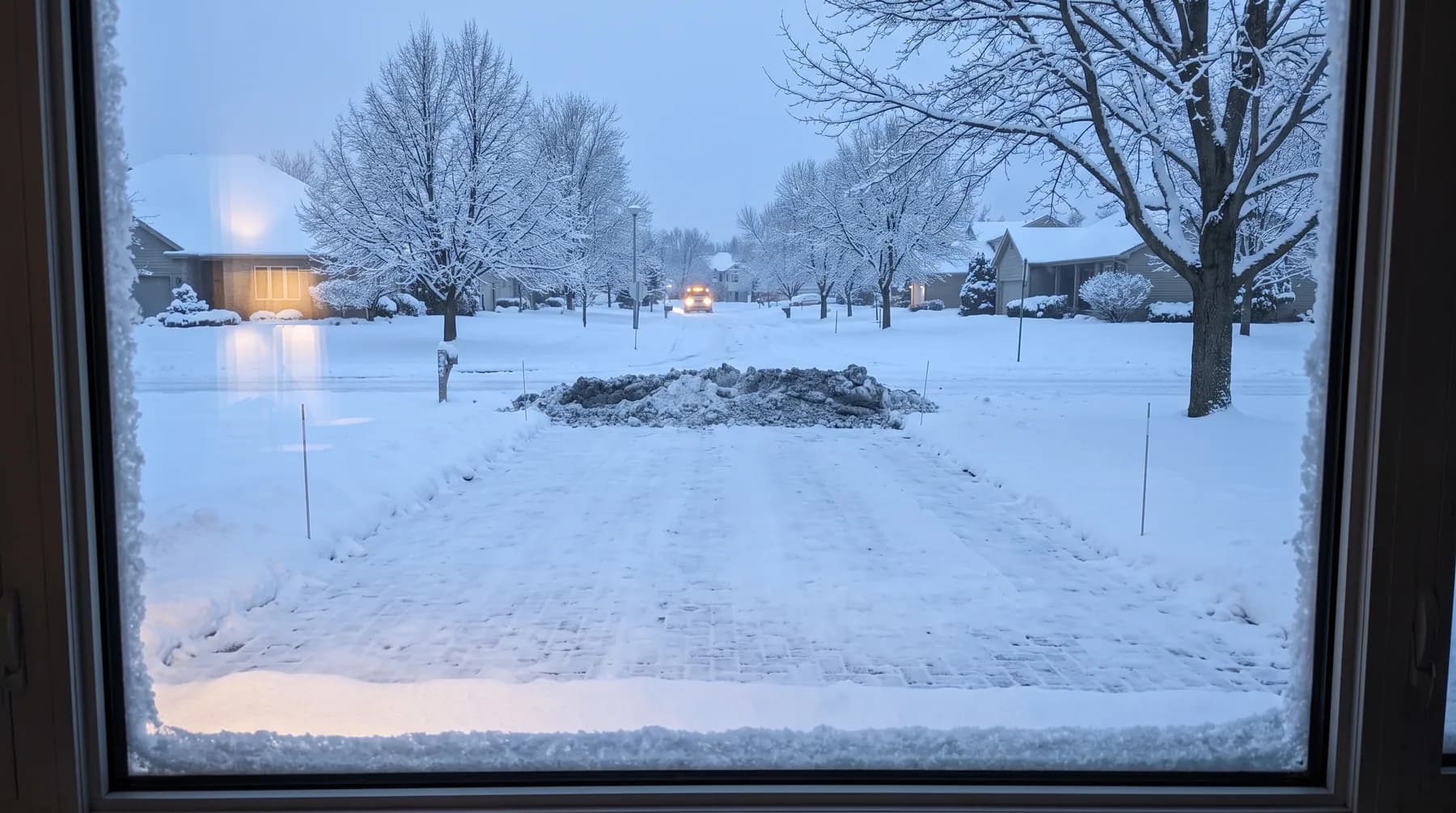
Two things surprise first time clients more than any others. The first is the windrow, the dense ridge of snow the municipal plow leaves across the end of your driveway, always after you thought the job was done. Whether your contractor clears that ridge is a question worth settling in advance, because it is heavy, it is compacted, and it is the single most common source of a driveway that is technically cleared yet impossible to leave.
The second is salt. Some contracts include it, some bill it separately, and some do not touch it at all. Ask what is applied, where, and how often, and ask specifically about walkways and steps, since a cleared driveway beside an icy path to the door is only half a service. Whether steps, walkways and the area around parked vehicles are included is the detail that separates a genuine service from a single pass with a plow.
Protecting the Driveway Underneath the Snow
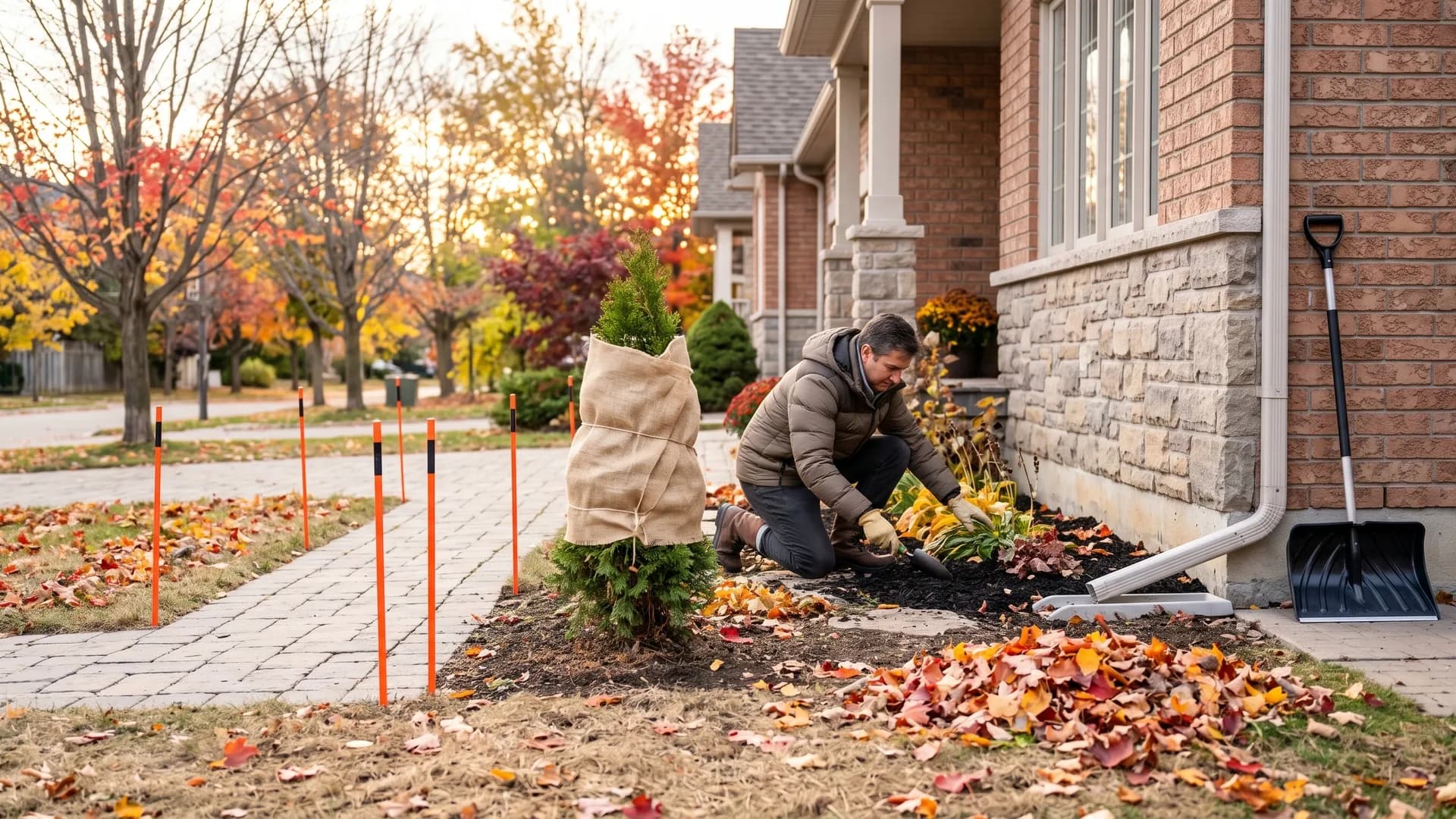
A good operator is protecting your property as much as clearing it, and this matters enormously on an interlocking surface. A blade set too low or driven carelessly can catch an edge course and lift it, and damage done in the dark of a February morning does not reveal itself until the thaw. Careful crews mark the driveway edges with stakes before the first snowfall so the plow always knows where the stone ends and the garden begins.
If your driveway is interlock, this is not a minor concern. The same qualities that make a paved driveway beautiful make it vulnerable to rough winter handling, which is why seasonal care is really a year round conversation, one we cover in detail in our guide to caring for your interlocking driveway.
A contractor who already understands how your interlocking driveway was built is far less likely to damage it, because they know where the edges sit, how the surface drains, and where a blade can and cannot go. That familiarity is worth a great deal on a dark winter morning, and it is one of the strongest reasons to keep summer and winter care under a single roof rather than splitting them between contractors who have never seen the property before.
Booking Driveway Snow Removal Before the Season Closes
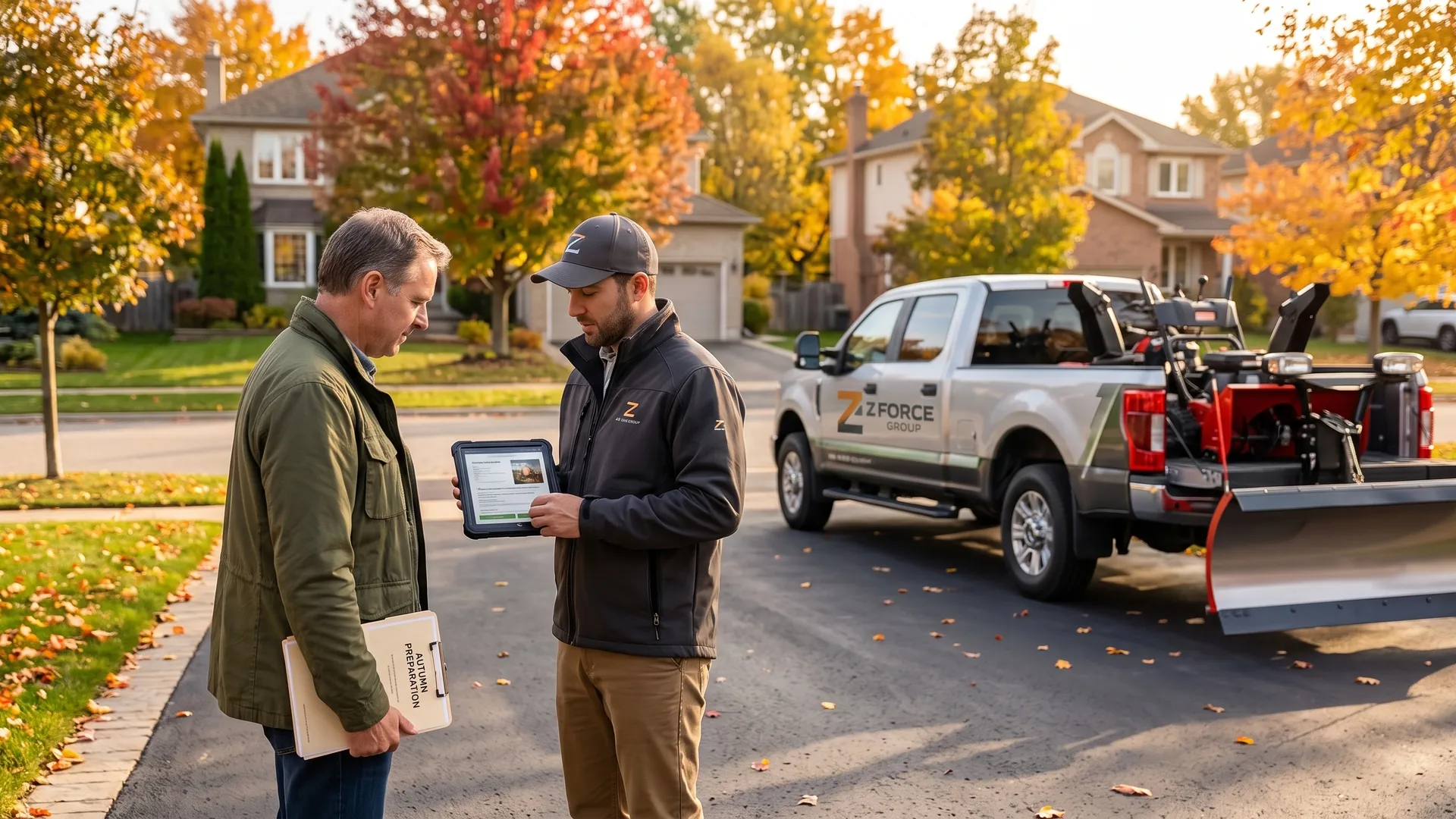
The uncomfortable truth of every winter is that the good contractors are fully booked before the first storm arrives. Reliable driveway snow removal is not something you arrange in December, because by then the routes are set and the seasonal spots are gone. The homeowners who spend the winter calm are the ones who booked in the autumn.
When you do book, get the scope in writing. Trigger depth, route position, whether the windrow is cleared, what salt is included, which surfaces beyond the driveway are covered, and the expected response time. That single page prevents almost every winter argument before it starts. Reserve your spot for this season and you will be watching the snow rather than watching the road.